

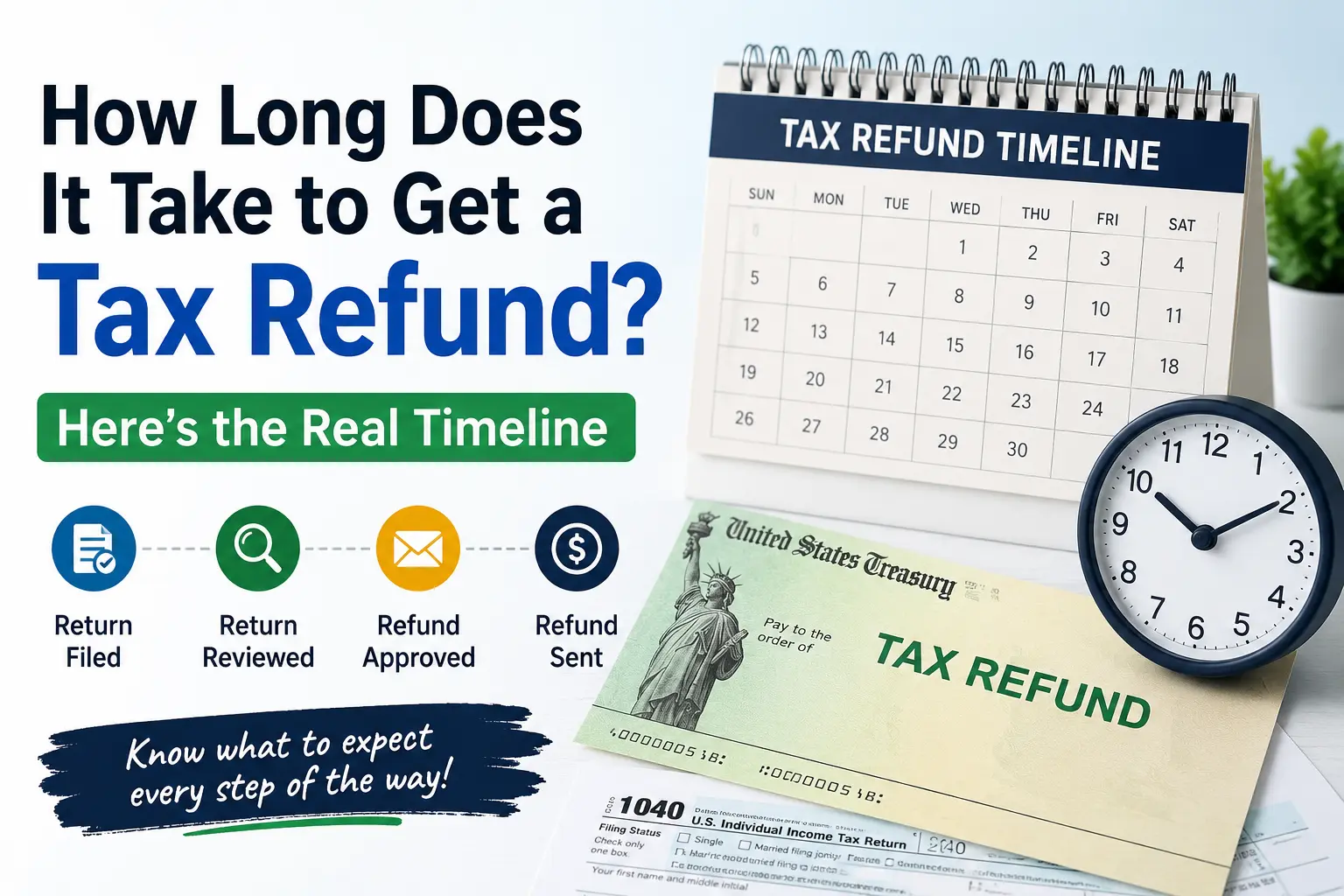
You filed your taxes. You hit submit. And now you’re refreshing your bank app like it owes you money — because, well, it does.
Waiting for a tax refund is one of those strange modern rituals where a government agency holds your own money hostage for a few weeks, and you just… wait. So let’s skip the guesswork and look at what actually determines when that deposit lands.
The Short Answer
Most people who e-file and choose direct deposit get their refund within 21 days of the IRS accepting their return. That’s not a marketing promise — it’s the IRS’s own standard processing window, and the agency has stuck close to it in 2026, with over 80% of refunds issued in less than 21 days as of late March.
Paper filers wait longer. A lot longer.
Tax Refund Timeline: E-File vs. Paper
Here’s the breakdown, based on how you file and how you receive your money:
- E-file + Direct Deposit: Typically 1–3 weeks (up to 21 days) after acceptance
- E-file + Paper Check (limited availability): 21 days plus 1–3 extra weeks for mailing
- Paper Return + Direct Deposit: 4–6 weeks
- Paper Return + Mailed Check: 6–8 weeks, sometimes longer during peak season
One important detail: the clock starts when the IRS accepts your return, not when you hit “submit.” E-filed returns are usually accepted within 24 to 48 hours, so that gap is small but real.
- Check Reverse sale tax Caclulator for your tax usage.
Big Change for 2026: Paper Checks Are Basically Gone
If you’ve filed taxes before and always got a paper check in the mail, pay attention here.
Starting September 30, 2025, the IRS began phasing out paper tax refund checks for most individual filers, as directed by Executive Order 14247. In plain English: if you don’t give the IRS your bank account and routing number, your refund isn’t just going to show up as a check anymore.
Instead, filers without direct deposit information on file are now more likely to receive a prepaid debit card in a plain envelope — which, fair warning, doesn’t exactly scream “this is your tax refund” when it lands in your mailbox. Don’t toss it thinking it’s junk mail.
This shift has also triggered a wave of CP53E notices — letters the IRS sends when it can’t verify your direct deposit details. If you get one, you generally have 30 days to update your banking information through your IRS Online Account before the agency defaults to issuing a paper check, which then takes about six more weeks.
Bottom line: double- and triple-check your routing and account numbers before you file. A single wrong digit can bounce your deposit and reset your entire timeline.
What Slows a Refund Down?
Refunds don’t get delayed for no reason. There’s almost always a cause, and most of them are avoidable:
- Errors on the return. Wrong Social Security numbers, math mistakes, mismatched names — small slip-ups create big delays.
- Missing information. Forgot a form? The IRS will pause your file until it’s complete.
- Identity or fraud checks. If something on your return looks unusual, the IRS may hold it for manual review.
- Filing on paper. Human data entry is simply slower than a computer reading your e-filed return.
- Claiming the EITC or Additional Child Tax Credit. By federal law under the PATH Act, the IRS cannot release these refunds before mid-February, regardless of how early you file. For 2026, most EITC/ACTC refunds are expected to hit accounts by around March 2.
- Bad or missing direct deposit info. As covered above, this is a bigger deal in 2026 than in past years.
How to Actually Check Your Refund Status
Skip the phone calls. The IRS gives you three free ways to track your refund:
- Where’s My Refund? on IRS.gov
- The IRS2Go mobile app
- Your IRS Individual Online Account
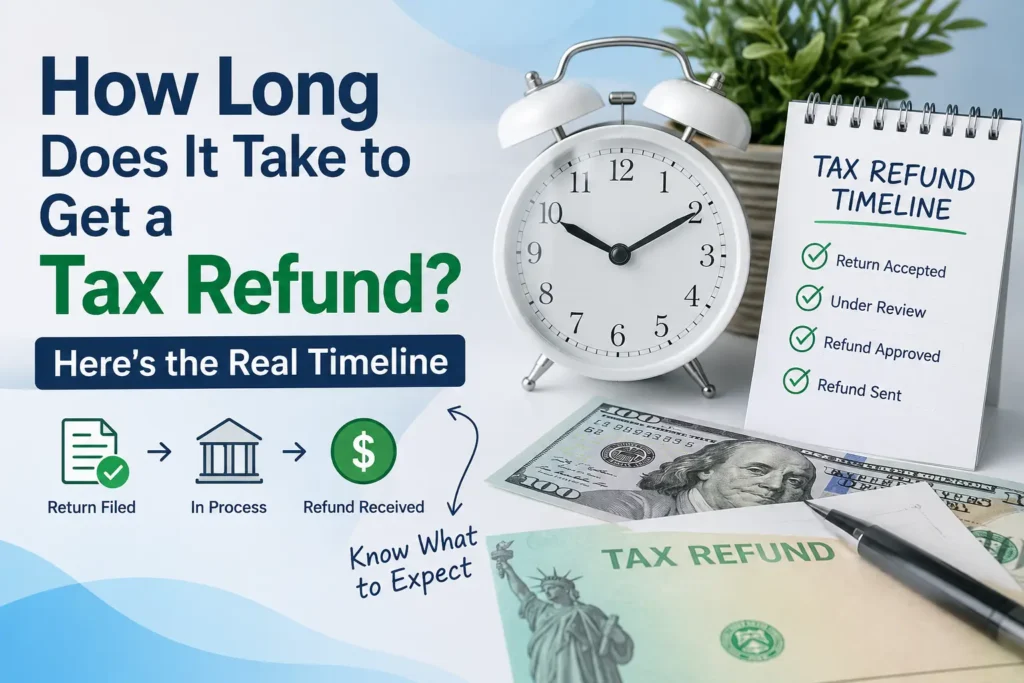
All three show the same three stages:
- Return Received
- Refund Approved
- Refund Sent
Here’s the part people rarely believe: the tool updates once every 24 hours, usually overnight. Refreshing it every ten minutes won’t summon your refund any faster — the IRS’s servers are not moved by your persistence, however impressive.
The Numbers, For Anyone Who Likes Proof
Skepticism is healthy, so here’s what the data actually shows for the 2026 filing season:
- The IRS opened the 2026 season on January 26, 2026.
- As of late March 2026, over 80% of refunds were issued in under 21 days.
- More than 98% of refunds were delivered electronically via direct deposit, out of roughly 57 million refunds issued.
- The average refund amount was around $3,571 as of late March, running higher than the same point in 2025.
- The federal filing deadline for most taxpayers is April 15, 2026.
These figures come directly from IRS newsroom announcements, not estimates pulled out of thin air.
Tips to Get Your Refund Faster
None of these are secrets. All of them work.
- File early. The earlier your return enters the queue, the earlier it’s processed — assuming you’re not claiming EITC/ACTC, which has its own fixed hold.
- E-file, always. Paper returns are processed by hand. E-filed returns are processed by software. One of these is faster.
- Choose direct deposit. It’s faster, safer, and — given the 2026 rule changes — increasingly the only smooth option.
- Verify your bank details before submitting. One wrong number can turn a 3-week wait into a 2-month wait.
- Proofread your return. SSNs, names, and math errors are still the most common (and most preventable) causes of delay.
When Should You Actually Contact the IRS?
Not immediately. Not after day 5. Patience is part of the process.
Reach out only if:
- It’s been more than 21 days since your e-filed return was accepted, or
- It’s been more than 6–8 weeks since you mailed a paper return, and
- Where’s My Refund? shows no update or flags an issue
When you do call, have your Social Security number, filing status, and exact refund amount ready — the IRS will ask to verify your identity before discussing anything.
Frequently Asked Questions
How long does it take to get a tax refund after e-filing? Most e-filed refunds with direct deposit arrive within 21 days of IRS acceptance, though many arrive sooner.
Why is my refund taking longer than 21 days? Common reasons include tax return errors, incomplete forms, identity verification holds, claiming EITC/ACTC, or missing/invalid direct deposit information.
Do I still get a paper check in 2026? Rarely, and only under specific exceptions. Most filers without direct deposit details on file now receive a prepaid debit card instead of a mailed check.
Can I speed up my refund by calling the IRS? No. Calling early doesn’t change processing speed — it just ties up a phone line. Use the online tracking tools instead.
The Bottom Line
If there’s one habit that consistently gets people paid faster, it’s this: e-file, choose direct deposit, and get your numbers right the first time. Everything else — PATH Act holds, paper backlogs, review flags — is largely outside your control. But the parts you can control make the biggest difference.
Your refund isn’t lost. It’s just moving through a very large, very methodical government machine. Give it its 21 days, check the tracker once a day (not once an hour), and let the process do what it’s built to do.
This article is for general informational purposes and isn’t personalized tax advice. For guidance specific to your situation, consult a licensed CPA or tax professional.
